Navigating London’s congested streets and motorways presents unique challenges for motorists, and vehicle breakdowns remain an unfortunate reality of city driving. Whether you’re commuting through central London, navigating the North Circular, or travelling across the M25, understanding breakdown recovery services and knowing what to do when your vehicle fails can save valuable time, money, and stress. This comprehensive guide explores everything you need to know about breakdown recovery in London, from emergency procedures to selecting the right recovery provider for your specific needs.
Understanding Breakdown Recovery Services in London
Breakdown recovery encompasses a range of professional services designed to assist motorists when their vehicles fail. In London’s complex urban environment, these services extend far beyond simple towing operations to include sophisticated roadside assistance, battery support, and specialized recovery techniques suited to the capital’s unique challenges.
What Breakdown Recovery Services Include
Professional breakdown recovery in London typically encompasses several core services that address different emergency scenarios. Roadside assistance forms the foundation, with technicians attempting to diagnose and repair issues on-site, saving you the inconvenience and expense of towing.
Standard services include:
- Battery jump-starts and replacement for flat or failing batteries
- Tyre changes when you experience a puncture or blowout
- Fuel delivery if you run out of petrol or diesel
- Lock-out assistance when keys are locked inside the vehicle
- Minor mechanical repairs performed at the roadside
- Towing services to garages, home addresses, or designated locations
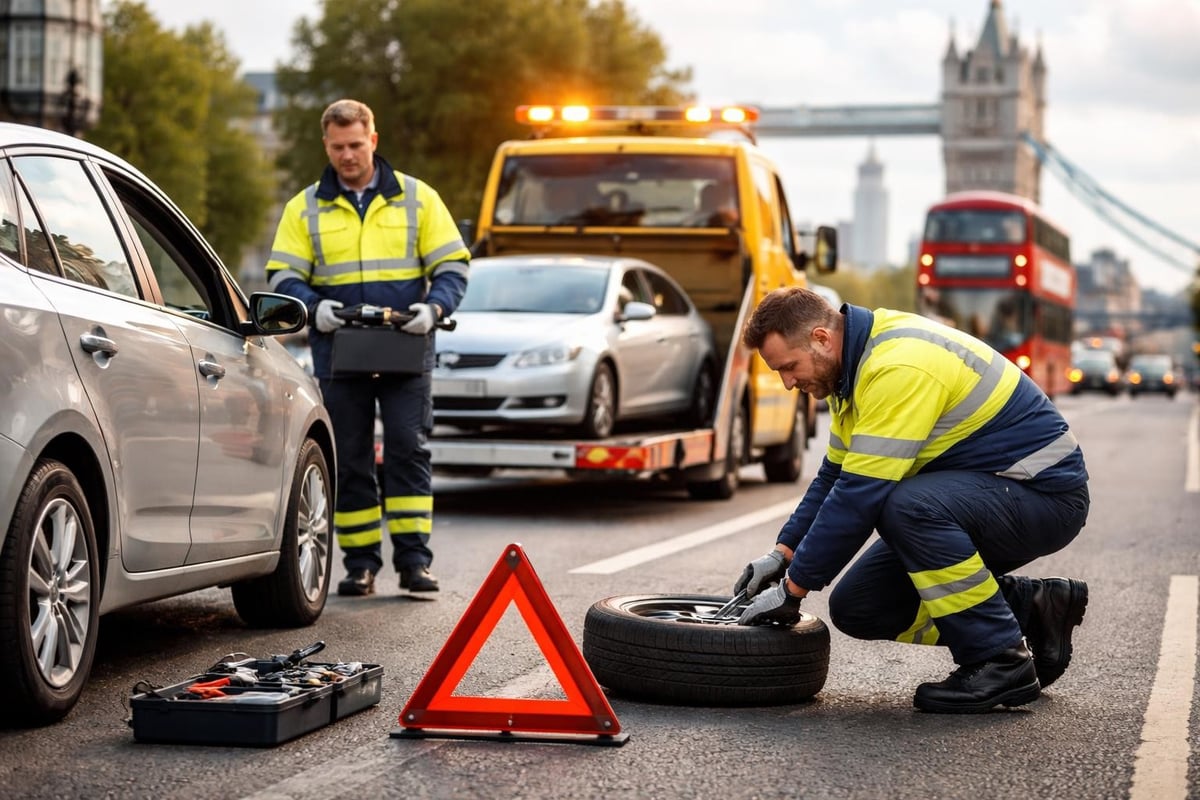
Recovery services in the capital must navigate unique obstacles including restricted parking zones, congestion charge areas, ultra-low emission zones, and height-restricted streets. Professional providers maintain comprehensive knowledge of London’s road regulations and access restrictions to ensure compliant and efficient recovery operations.
Types of Vehicles Covered
Breakdown recovery in London caters to diverse vehicle types, each requiring specialized equipment and expertise. Car recovery remains the most common service, covering everything from compact city vehicles to luxury saloons and SUVs. Van recovery requires larger recovery vehicles and higher weight capacity, essential for tradespeople and businesses operating commercial vehicles throughout the capital.
Motorcycle recovery presents distinct challenges, requiring specialized equipment such as bike trailers or recovery vehicles with secure anchoring systems. Many London recovery providers offer dedicated motorcycle services, understanding that two-wheeled vehicles cannot be recovered using standard car recovery methods.
Why Breakdowns Happen in London
Understanding common breakdown causes helps motorists take preventive measures and recognize warning signs before complete failure occurs. London’s driving conditions create specific stresses on vehicles that contribute to mechanical failures and electrical issues.
Common Causes of Vehicle Breakdowns
Battery failures top the list of breakdown causes across London, particularly during winter months when cold temperatures strain electrical systems. Stop-start traffic throughout central London and inner boroughs places exceptional demand on batteries, reducing their lifespan compared to motorway driving.
Tyre problems rank as another leading cause, with London’s potholed roads and urban debris creating puncture risks. The combination of speed bumps, deteriorating road surfaces, and construction zones increases the likelihood of tyre damage and blowouts.
| Breakdown Cause |
Percentage of Incidents |
Peak Season |
| Battery failure |
35% |
Winter |
| Tyre problems |
20% |
Year-round |
| Engine issues |
18% |
Summer |
| Fuel problems |
12% |
Year-round |
| Alternator failure |
8% |
All seasons |
| Other electrical |
7% |
Winter |
Engine overheating becomes more prevalent during summer months when London temperatures rise and air conditioning systems place additional strain on cooling mechanisms. Congested traffic with minimal airflow exacerbates overheating risks, particularly for older vehicles or those with marginal cooling system performance.
Preventive Maintenance
Regular vehicle servicing significantly reduces breakdown risks. Following manufacturer service schedules ensures critical components receive inspection and maintenance before failures occur. The UK government’s MOT testing requirements provide minimum safety standards, though proactive maintenance extends beyond these annual checks.
Simple preventive measures include:
- Monthly battery checks examining terminals for corrosion
- Weekly tyre pressure monitoring maintaining manufacturer specifications
- Regular fluid level inspections including oil, coolant, and brake fluid
- Timely replacement of worn components such as belts and hoses
- Attention to warning lights addressing dashboard indicators promptly
Immediate Steps When Your Vehicle Breaks Down
Knowing how to respond during a breakdown protects your safety and facilitates efficient recovery. Different locations require specific procedures, with motorway breakdowns presenting distinct hazards compared to urban street failures.
Motorway and Dual Carriageway Breakdowns
If your vehicle fails on a motorway or dual carriageway, move to the hard shoulder where possible, positioning as far left as practicable. Exit the vehicle from the passenger side, away from traffic, and move behind the barrier if one exists. Highways England provides comprehensive guidance on motorway breakdown procedures, emphasizing the importance of staying clear of your vehicle.
Use emergency roadside telephones rather than mobile phones when available, as these automatically provide your location to control centres. Never attempt repairs on the hard shoulder, and never cross motorway lanes to reach emergency phones on the opposite side.
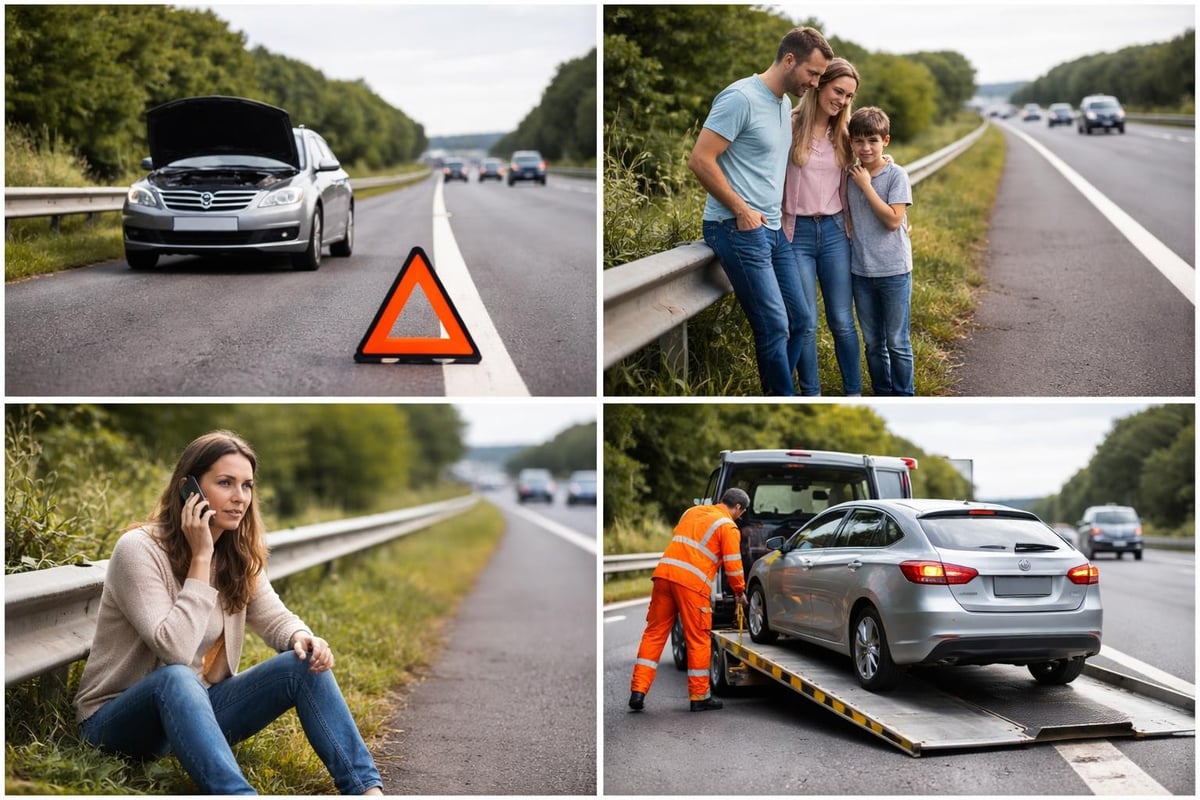
Smart motorway sections without hard shoulders require extra vigilance. Activate hazard lights immediately and attempt to reach an emergency refuge area. If stopping in a live lane becomes unavoidable, remain in the vehicle with seatbelts fastened and dial 999 immediately.
Urban Street Breakdowns
Breakdowns on London streets present different challenges, particularly regarding traffic flow and parking regulations. Activate hazard warning lights immediately to alert other road users. If possible, coast the vehicle to a safer location such as a side street or parking bay, even if this requires pushing the vehicle a short distance.
Consider your environment when deciding whether to remain in the vehicle or exit. On quiet residential streets, remaining inside may prove safest, whilst busy main roads might necessitate evacuating to the pavement. Always prioritize personal safety over vehicle security.
Choosing a Breakdown Recovery Provider
Selecting the right breakdown recovery provider involves evaluating response times, service coverage, pricing structures, and additional benefits. London’s competitive recovery market offers numerous options, from major national organizations to specialized local operators.
National Versus Local Providers
National breakdown organizations like The AA and The RAC offer extensive networks and comprehensive membership packages. These providers maintain widespread coverage and established reputations, though membership fees and call-out charges can accumulate significant annual costs.
Local specialists focusing on breakdown recovery in London often provide faster response times within their operating areas, leveraging intimate knowledge of London’s road network and traffic patterns. These providers typically offer competitive pricing for pay-as-you-go services and may specialize in particular vehicle types or recovery scenarios.
Key Factors to Consider
Response time remains crucial when comparing providers. London traffic patterns significantly impact arrival times, with providers maintaining strategically positioned vehicles throughout the capital better equipped to reach breakdowns quickly. Ask potential providers about average response times for your typical routes and operating areas.
Service availability matters particularly for commercial vehicle operators and those with irregular schedules. Twenty-four-hour operations ensure assistance regardless of when breakdowns occur, essential for night workers, early commuters, and weekend travellers. Verify whether providers maintain full-service capabilities overnight or utilize third-party contractors during unsociable hours.
| Provider Type |
Average Response Time |
Coverage Area |
Typical Cost Structure |
| National membership |
45-60 minutes |
Nationwide |
Annual membership £80-200 |
| Local specialist |
30-45 minutes |
Greater London |
Pay-per-use £75-150 |
| Insurance add-on |
60-90 minutes |
Variable |
Included in premium |
| Manufacturer assistance |
40-60 minutes |
Nationwide |
Included with new vehicles |
Additional services and capabilities differentiate providers in London’s competitive market. Specialist equipment for prestige vehicles, motorcycle recovery expertise, and commercial vehicle capacity indicate provider versatility and investment in professional operations.
Cost Considerations for London Recovery
Understanding breakdown recovery costs helps motorists budget appropriately and make informed decisions when selecting coverage options. Pricing varies considerably based on service type, distance, time of day, and specific circumstances.
Typical Pricing Structures
Single call-out charges for breakdown recovery in London typically range from seventy-five to one hundred fifty pounds, depending on vehicle type and required services. Straightforward roadside assistance generally costs less than full recovery and towing, though prices increase for specialist vehicles, awkward locations, or out-of-hours services.
Distance significantly impacts towing costs, with most providers charging per mile beyond an initial included distance. Central London recoveries to outer boroughs or Home Counties destinations accumulate substantial mileage charges. Expect premium rates for motorway recoveries, restricted access locations, and emergency priority responses.
Membership Versus Pay-As-You-Go
Annual breakdown membership provides cost certainty and often includes additional benefits beyond basic recovery. Membership packages typically cover multiple call-outs per year, various service levels, and sometimes extend to additional drivers or vehicles. For motorists experiencing frequent issues or driving older vehicles, membership often proves economical compared to individual call-out charges.
Pay-as-you-go arrangements suit occasional users and those maintaining well-serviced modern vehicles. This approach avoids annual fees but exposes motorists to potentially higher individual recovery costs. Consider your vehicle’s age, condition, mileage, and your typical driving patterns when evaluating membership value.
Specialized Recovery Scenarios
Certain breakdown situations require specialized knowledge, equipment, or procedures beyond standard recovery operations. Understanding these scenarios helps motorists recognize when specialist assistance becomes necessary.
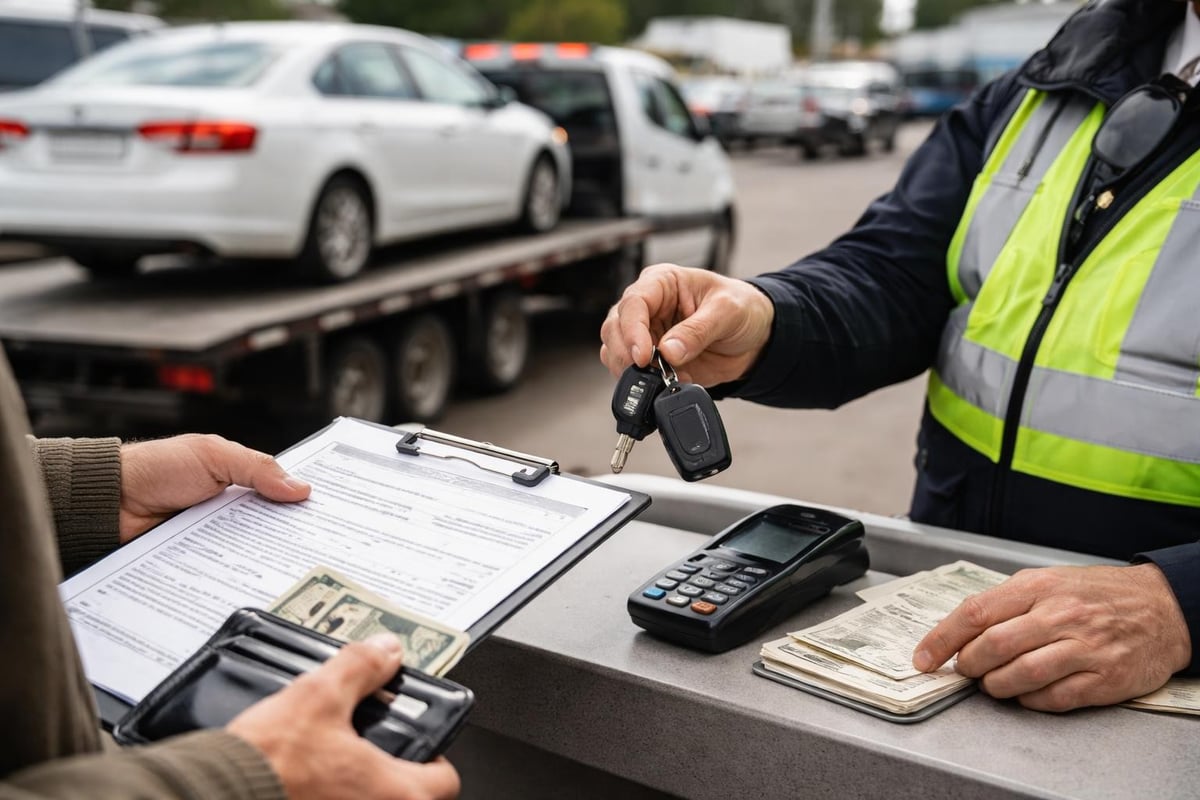
Vehicles removed by police or local authorities following accidents, parking violations, or other incidents require recovery from official pounds. These recoveries involve additional administrative procedures, documentation requirements, and often significant storage charges accumulating daily. Authorized recovery operators familiar with police pound protocols expedite the retrieval process and minimize storage costs.
Required documentation typically includes:
- Proof of ownership such as V5C registration document
- Valid driving licence
- Insurance certificate
- Payment for recovery and storage fees
Commercial Vehicle Recovery
Vans and commercial vehicles present unique recovery challenges requiring higher-capacity equipment and different handling procedures. Loaded commercial vehicles demand accurate weight assessment before recovery attempts, as exceeding recovery vehicle capacity creates serious safety hazards. Professional commercial recovery operators maintain appropriately rated equipment and understand cargo securing requirements during transport.
Time sensitivity often elevates commercial recovery urgency, particularly for businesses dependent on vehicle availability for operations and customer commitments. Specialized providers offering priority response for commercial clients minimize business disruption and financial losses from extended downtime.
Emergency Preparation and Prevention
Proactive preparation reduces breakdown stress and improves outcomes when vehicle failures occur. Maintaining emergency equipment and understanding basic troubleshooting enables motorists to address minor issues independently or facilitate professional assistance.
Essential Emergency Kit
Every vehicle operating in London should carry basic emergency supplies enabling safe breakdown management. A warning triangle alerts approaching traffic to your stationary vehicle, whilst high-visibility vests ensure you remain visible when exiting the vehicle or standing nearby. These items carry legal requirements in many European countries and represent sensible safety precautions even within the UK.
Additional recommended items include:
- Torch with spare batteries for nighttime breakdowns and inspections
- First aid kit addressing minor injuries during incidents
- Jump leads enabling battery assistance from other motorists
- Basic tool kit for minor adjustments and temporary repairs
- Spare tyre and jack with wheel brace for puncture repairs
- Phone charger ensuring communication capability
Regular Maintenance Schedule
Consistent vehicle maintenance represents the most effective breakdown prevention strategy. Establish a maintenance schedule aligned with manufacturer recommendations, documenting all services and repairs. This record proves valuable when diagnosing recurring issues and demonstrates proper care during warranty claims or vehicle sales.
Pay particular attention to components prone to failure in London’s demanding driving conditions. Battery testing before winter identifies marginal units requiring replacement before cold weather triggers failure. Tyre condition monitoring catches wear patterns indicating alignment issues or suspension problems before blowouts occur.
Finding Reliable Breakdown Recovery in London
Identifying trustworthy recovery providers before emergencies occur enables informed decisions during stressful breakdown situations. Research providers during calm periods rather than frantically searching whilst stranded roadside.
Verification and Credentials
Legitimate breakdown recovery operations maintain proper licensing, insurance, and professional certifications. Verify providers hold appropriate business insurance covering recovery operations and potential vehicle damage during transport. Professional trade associations indicate commitment to industry standards and continuing professional development.
Online reviews and testimonials provide insight into provider reliability, customer service quality, and pricing transparency. Consistent positive feedback regarding response times, professional conduct, and fair pricing identifies dependable operators. Conversely, patterns of complaints about delayed arrivals, hidden charges, or vehicle damage warrant serious concern.
Establishing Provider Relationships
Building relationships with reliable recovery providers before breakdowns occur streamlines emergency responses and often yields preferential treatment. Many operators offer enhanced service levels or priority response to established customers and account holders. Commercial vehicle operators particularly benefit from dedicated account management and customized service agreements.
Store recovery provider contact details in multiple accessible locations including mobile phones, vehicle glove boxes, and wallet cards. Programme numbers into phone contacts rather than relying on internet searches during stressful roadside emergencies when connectivity may prove unreliable.
London-Specific Recovery Challenges
The capital’s unique characteristics create distinct recovery challenges requiring specialized knowledge and adapted approaches. Understanding these factors helps motorists appreciate the complexity of professional breakdown recovery in London and set realistic expectations during incidents.
Traffic and Access Restrictions
London’s congestion charge zone, ultra-low emission zone, and various local traffic restrictions impact recovery operations throughout central areas. Recovery vehicles must comply with emission standards whilst navigating restricted streets, adding operational complexity and potential costs. Red routes prohibiting stopping require rapid recovery vehicle positioning and swift vehicle loading to avoid penalties.
Height restrictions beneath railway bridges and historic archways limit recovery vehicle routing, particularly for larger recovery trucks transporting vans or vehicles on elevated beds. Professional London operators maintain comprehensive knowledge of clearance heights, weight limits, and access restrictions enabling efficient route planning.
Peak Hour Considerations
London traffic patterns dramatically affect recovery response times and operational efficiency. Rush hour congestion during morning and evening peaks significantly extends journey times for recovery vehicles, potentially doubling or tripling response durations compared to off-peak periods. Weekend events, major incidents, and roadworks create additional unpredictable delays throughout the capital.
Realistic response time expectations account for current traffic conditions and breakdown locations. Central London recoveries during peak hours may require patience, whilst outer borough and orbital motorway responses often achieve faster arrival times despite greater distances.
Understanding breakdown recovery processes, preparation strategies, and provider selection criteria ensures London motorists can navigate vehicle failures safely and efficiently. When breakdowns occur across Greater London or the Home Counties, Motors Recovery delivers professional 24-hour assistance for cars, vans, and motorcycles, combining experienced technicians with modern recovery equipment to minimize your disruption and restore your mobility quickly. Their comprehensive services including roadside assistance, towing, and police pound recovery provide the reliable support you need when vehicle emergencies strike.

