Picture yourself in 2026, stuck on a busy motorway as your car comes to an abrupt halt. The stress is immediate, especially with today’s advanced vehicles where a breakdown recovery car call is no longer straightforward. Modern technology brings convenience but also new challenges, making preparation more crucial than ever. With the right information and a clear recovery plan, you can transform a stressful breakdown into a manageable inconvenience. This guide delivers essential, up-to-date advice for car breakdown recovery in 2026, covering breakdown cover, the latest technology, step-by-step actions, how to choose the right provider, and practical tips for peace of mind.
Understanding Breakdown Recovery in 2026
Breakdown recovery car services have evolved rapidly to keep pace with the changing landscape of UK roads. With over 38 million vehicles now in circulation and rising breakdown incidents each year, understanding how modern recovery operates is vital for any driver. The expansion of electric and hybrid vehicles, alongside new digital tools, is transforming both expectations and solutions.
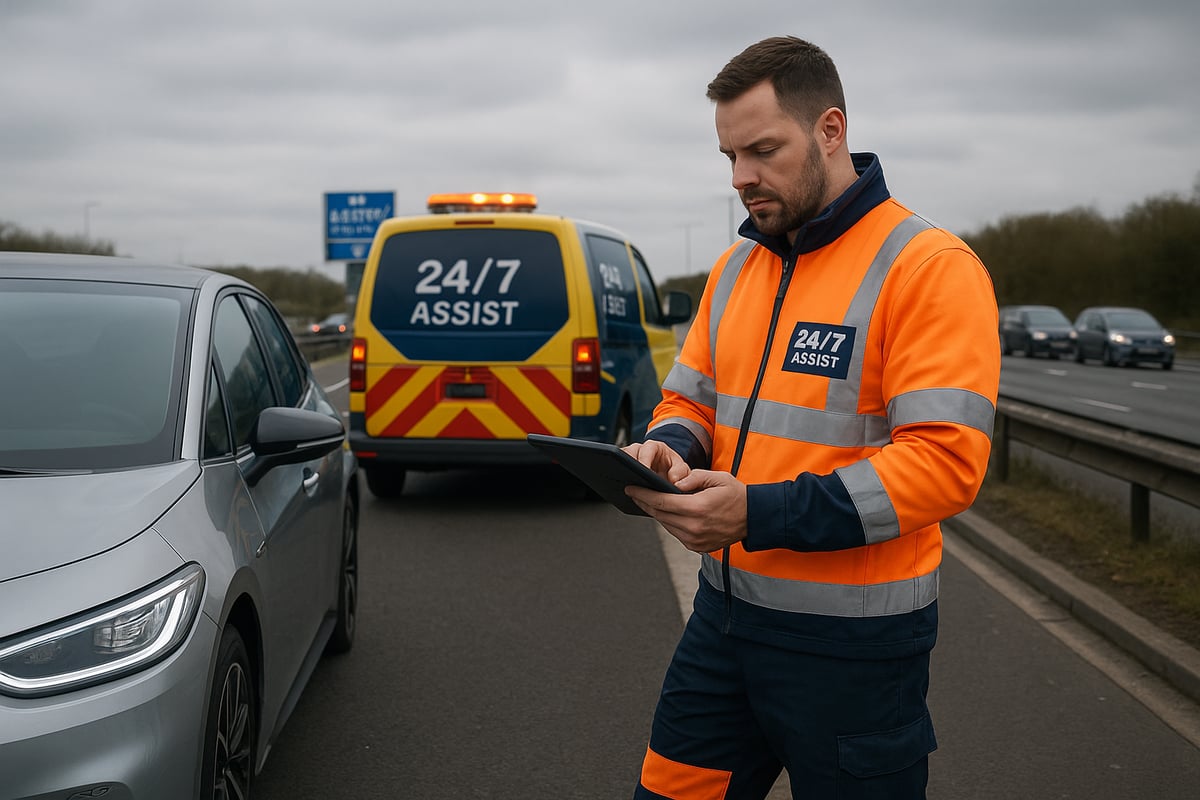
The Evolution of Breakdown Recovery Services
Breakdown recovery car solutions have a long history in the UK, stretching back to the days when assistance meant a tow truck and a basic toolkit. Over the decades, services have adapted to keep up with increasingly complex vehicles and busier roads.
In recent years, technology has had a major impact. Many providers now use AI-driven dispatch systems to allocate resources, cutting average response times and improving efficiency. Digital apps allow drivers to request help, track their recovery vehicle, and communicate with support teams in real time.
The shift to electric and hybrid vehicles is another major factor. In 2026, over 30% of new car sales are electric or hybrid, requiring specialist skills and equipment for safe recovery. There is also a growing demand for eco-friendly solutions, such as low-emission recovery vehicles and mobile charging units.
Statistics highlight the scale of the challenge. With millions of vehicles on the road and breakdowns on the rise, providers must adapt to meet new expectations and deliver rapid, reliable support to every breakdown recovery car callout.
Types of Breakdown Recovery Cover
Drivers in 2026 can choose from a range of breakdown recovery car cover options. The most common include:
- Roadside Assistance: Help at the scene of the breakdown.
- National Recovery: Transporting your vehicle anywhere in the UK.
- Home Start: Assistance if your car will not start at home.
- Onward Travel: Arrangements for alternative transport or accommodation.
There are also choices between personal cover, which protects the individual in any vehicle, and vehicle cover, which applies to a specific car. As technology advances, providers offer tailored packages for electric vehicles and connected cars, including mobile charging services for EVs.
It is crucial to read policy details carefully, noting what is included or excluded. Some packages now specifically mention EV support, roadside charging, or software diagnostics. For a comprehensive overview of available options, drivers can consult the Car Recovery Services Overview.
Key Features to Look for in 2026
Modern breakdown recovery car policies offer more than just towing. Key features to consider include:
- Coverage for Advanced Driver Assistance Systems (ADAS): Support for vehicles with complex safety technology.
- Electric and Hybrid Vehicle Support: Assistance with charging issues and access to trained technicians.
- App-Based Tracking: Real-time updates and direct communication with your recovery provider.
- Multi-Vehicle and Family Cover: Flexible options for households with more than one car.
A 2025 survey found that 65% of drivers now prefer digital-first recovery services, making app-based solutions and instant updates essential. As vehicles become more connected, having a breakdown recovery car policy that supports both traditional and modern needs is more important than ever.
What To Do When Your Car Breaks Down: Step-By-Step Guide
A breakdown recovery car emergency can happen without warning, and knowing exactly what to do can make all the difference. This step-by-step guide ensures you handle the situation calmly and effectively, keeping yourself and others safe while waiting for help.
Step 1: Ensure Safety First
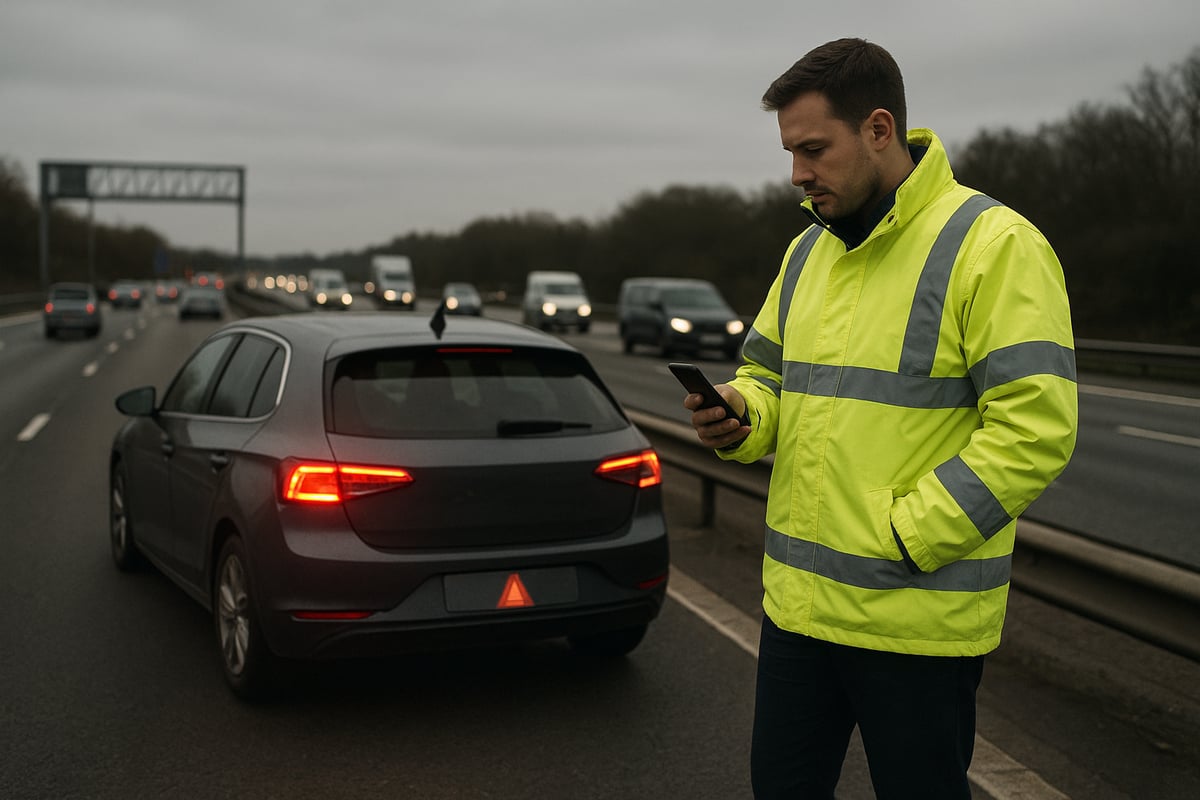
When your breakdown recovery car issue strikes, your first priority must always be safety. Pull over to a safe spot as far from traffic as possible. Switch on your hazard lights immediately so other drivers can see you.
If you have them, put on reflective jackets before exiting the car. It is vital to guide passengers away from moving traffic, especially on busy roads. Place a warning triangle at a safe distance behind your vehicle, but only if local laws allow and it is safe to do so.
On smart motorways, never leave the car unless you are absolutely certain it is safe. Remain inside with seatbelts fastened and hazard lights on until help arrives. These steps keep everyone protected during a breakdown recovery car incident.
Step 2: Assess the Situation
After ensuring safety, take a moment to assess what might be wrong with your vehicle. Common breakdown recovery car issues include flat tyres, dead batteries, or running out of fuel. Use your dashboard’s warning lights and any built-in diagnostic systems to identify faults.
Sometimes, the problem is obvious, like a puncture or an empty fuel gauge. However, with modern vehicles, especially electric cars, warning lights can indicate complex issues. Never attempt a DIY repair involving high-voltage systems or components you are unfamiliar with.
If you suspect a flat battery, it is best to seek professional help. For instance, you can find Car Battery Jump Start Help to get back on the road safely and avoid further damage.
Step 3: Contacting Breakdown Services
Once you have identified the problem, it is time to contact your chosen breakdown recovery car service. Most providers now offer digital platforms and apps for quick communication, ensuring you get help as fast as possible.
Share your precise location using GPS or apps like What3Words. Be ready to provide essential details such as your car’s registration, the nature of the fault, and your contact information. This helps the breakdown team prepare the right tools before arrival.
The average response time in the UK is usually under 60 minutes, thanks to advanced dispatch systems. Keeping calm and providing accurate information ensures a swift and efficient breakdown recovery car response.
Step 4: Waiting for Help
While waiting for your breakdown recovery car service, remain vigilant about safety. If you are in a safe location, stay outside the vehicle and well away from the road. On busy or smart motorways, it is safer to stay inside with seatbelts fastened.
Keep yourself and your passengers comfortable by using blankets in cold weather or seeking shade during summer. Use your provider’s app or phone line to stay updated on the estimated arrival time. Most services now offer real-time tracking, so you always know when help is on the way.
Regular communication with your breakdown recovery car provider can help you feel reassured and prepared throughout the wait.
Step 5: Next Steps After Recovery
After your breakdown recovery car provider arrives and assists you, consider your options for moving forward. In many cases, repairs can be completed at the roadside, allowing you to continue your journey without delay.
If a tow is required, your vehicle will be transported to a nearby garage or your chosen destination. Some providers offer onward travel solutions, such as courtesy cars or arranging public transport, to minimise disruption.
Do not forget to collect any necessary documentation for insurance, especially if the breakdown resulted from an accident. Staying organised and proactive after a breakdown recovery car incident ensures a smooth return to normality.
Choosing the Right Breakdown Recovery Provider
Selecting the most suitable breakdown recovery car provider in 2026 can make all the difference when trouble strikes on the road. With so many options and evolving technologies, making an informed decision has never been more important. The right choice ensures you receive prompt, reliable support tailored to your driving habits and vehicle type.
Evaluating Your Needs
Before committing to a breakdown recovery car provider, assess your personal and vehicle requirements. Start with your travel habits. Do you mostly drive locally or often take long journeys across the country? Regular long-distance drivers may need national cover, while those who stay close to home could opt for more localised services.
Next, consider the type of vehicle you own. Petrol, diesel, electric, and hybrid cars all present unique challenges in breakdown situations. Electric vehicle (EV) owners, for instance, may require mobile charging as a standard feature within their breakdown recovery car policy. Think about whether your cover needs to extend to family members or multiple vehicles, especially if you share cars or have young drivers at home.
Finally, identify if your car is used for personal or business purposes. Business users often benefit from more comprehensive policies, ensuring minimal disruption to work schedules. By clearly understanding your needs, you can narrow down the best breakdown recovery car options for your circumstances.
Comparing Providers and Policies
Once you have outlined your requirements, start comparing breakdown recovery car providers. Major UK companies in 2026 offer a variety of membership models, including annual subscriptions and pay-as-you-go alternatives. Price is an important factor, but do not overlook the fine print. Watch out for exclusions, call-out limits, and any extra charges for specialist services.
Customer service ratings and response times are crucial indicators of reliability. According to a 2025 poll, the top priorities for UK drivers are cost and quick response. Always check for features such as app-based tracking, digital claims, and multi-vehicle discounts. Some providers include advanced driver assistance system (ADAS) support or specific EV breakdown recovery car services, which can be essential for modern vehicles.
To help with your decision, create a quick comparison table:
| Feature |
Provider A |
Provider B |
Provider C |
| National Cover |
Yes |
No |
Yes |
| EV Support |
Yes |
Yes |
No |
| Pay-as-you-go |
No |
Yes |
Yes |
| App Tracking |
Yes |
Yes |
Yes |
| Multi-Vehicle |
Yes |
No |
Yes |
Carefully reading the details ensures your breakdown recovery car policy meets your expectations and covers what truly matters.
Motors Recovery stands out for drivers seeking a flexible breakdown recovery car solution in Greater London and the Home Counties. With 24/7 availability, you pay only when you need help, making it ideal for occasional drivers or those who value transparent pricing.
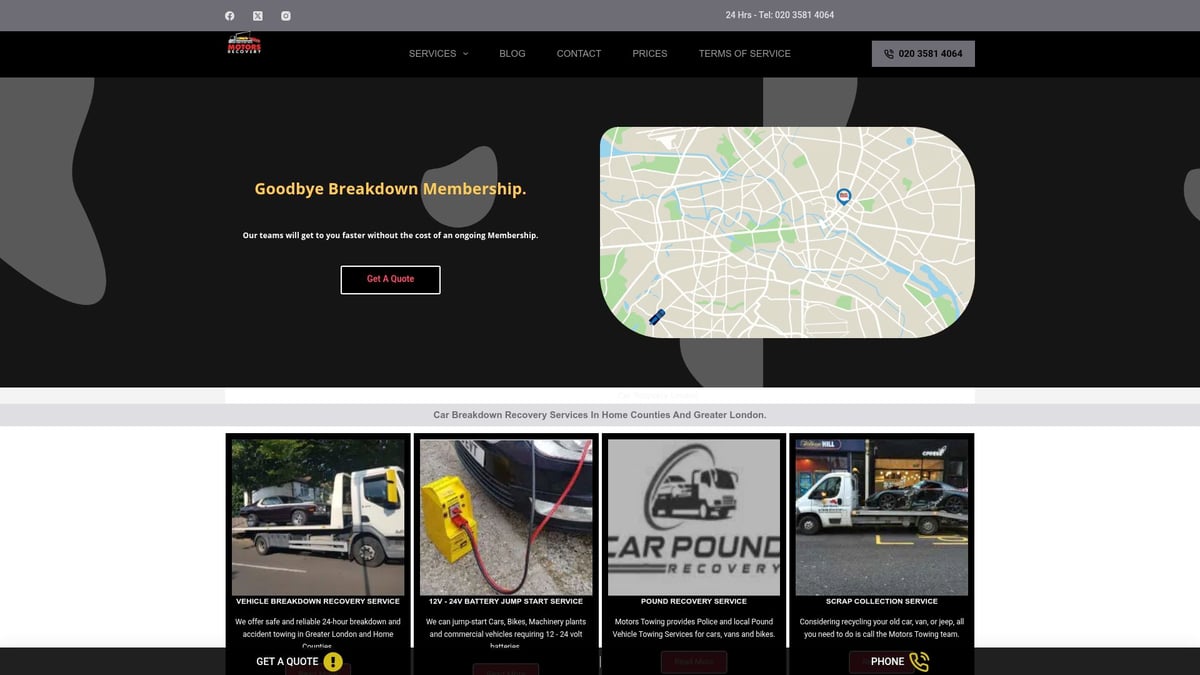
The modern fleet and experienced technicians deliver rapid responses, often within 60 minutes. Services cater to cars, vans, motorcycles, and electric vehicles, ensuring comprehensive support whatever you drive. Digital booking and communication make the process efficient and stress-free.
For example, a London commuter faced a battery failure and used Motors Recovery’s app. Within an hour, the breakdown recovery car team had the vehicle back on the road, minimising disruption and providing peace of mind.
Breakdown Recovery for Electric and Hybrid Cars
Electric and hybrid vehicles are becoming a common sight on UK roads, with over 30% of new car sales in 2026 now falling into these categories. As their numbers rise, so does the need for tailored breakdown recovery car services that address the unique technical and logistical challenges these vehicles present.
Unique Challenges of EV and Hybrid Breakdowns
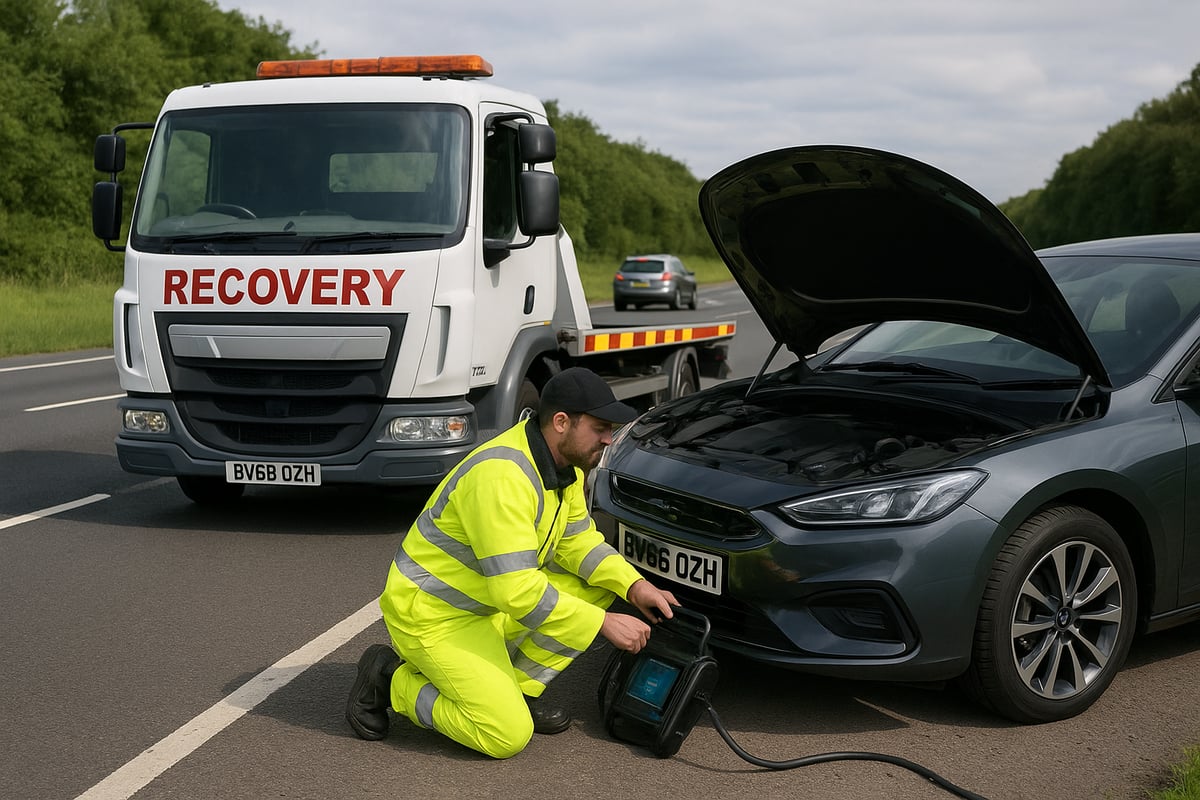
Breakdown recovery car services for electric and hybrid vehicles must address distinct challenges. Flat batteries remain a leading cause of breakdowns, but issues such as charging system failures and complex software glitches are increasingly common. Unlike traditional vehicles, high-voltage systems in EVs present serious risks, making DIY repairs unsafe for most drivers.
Specialist recovery equipment is often required, especially when an electric vehicle cannot be moved in the usual way. For instance, some EVs need flatbed transport to prevent damage to the drivetrain. By 2026, industry data shows that nearly one in three cars sold is electric or hybrid, highlighting the growing demand for dedicated breakdown recovery car solutions.
Providers now offer bespoke services, including mobile charging and on-the-spot diagnostics. If you drive an EV, consider exploring AA’s electric car breakdown cover, which details specialised assistance and the latest support options for electric vehicle owners.
Essential Cover for Modern Vehicles
Choosing the right breakdown recovery car cover involves more than just basic roadside assistance. Modern policies are evolving to support the specific needs of electric and hybrid vehicles. Look for services that include mobile charging units, as running out of charge is a unique risk for EV drivers. Providers with EV-trained technicians can safely handle high-voltage systems and advanced diagnostics.
Many companies now integrate charging station location support, helping drivers find the nearest solution if a breakdown occurs far from home. Some recovery fleets have invested in rapid mobile charging units, allowing you to get back on the road without a tow. The right breakdown recovery car policy should also cover specialist towing, ensuring your vehicle is transported safely.
| Essential Feature |
Why It Matters |
| Mobile Charging |
Immediate power for flat batteries |
| EV-Trained Technicians |
Safe handling of high-voltage EVs |
| Charging Station Support |
Find nearest charging points |
| Specialist Towing |
Prevents drivetrain damage |
These features are now considered standard for comprehensive breakdown recovery car cover in 2026.
Tips for EV/Hybrid Owners
Preparation is key to minimising stress during a breakdown recovery car event. Always carry emergency charging cables and relevant adapters specific to your vehicle. Plan your journeys with charging infrastructure in mind, particularly for long-distance travel.
Regularly update your vehicle’s software, as many issues can be prevented with up-to-date systems. Scheduled maintenance is also crucial for electric and hybrid vehicles. When breakdowns occur, opt for manufacturer-approved recovery services to protect your warranty and ensure expert handling.
By staying prepared and choosing the right breakdown recovery car cover, owners can turn unexpected problems into manageable inconveniences, ensuring safety and peace of mind on every journey.
Essential Items and Preparation for Car Breakdowns
Being prepared for a breakdown recovery car situation in 2026 means more than just having a spare tyre. The complexity of modern vehicles demands a combination of practical items, digital tools, and regular checks. By equipping your car and yourself, you can turn an unexpected breakdown into a manageable inconvenience rather than a major crisis.
Must-Have Items in 2026
Every driver should keep a well-stocked emergency kit in their vehicle, especially given the unpredictable nature of breakdown recovery car incidents. In 2026, the essentials go beyond the basics. Reflective jackets are vital for visibility, while warning triangles help alert oncoming traffic to your presence.
A powerful torch is crucial for nighttime breakdowns, and a comprehensive first aid kit offers peace of mind. Power banks ensure your phone remains charged, which is essential for contacting breakdown services. Emergency food, water, and thermal blankets can make a significant difference if you are stranded for an extended period.
For electric vehicle owners, portable charging cables and adapters are indispensable. Smart diagnostic devices are increasingly popular, allowing quick identification of faults before professional help arrives. The rise in pothole-related breakdowns, as highlighted by RAC pothole-related breakdowns in 2025, underlines the importance of preparedness for all drivers.
Digital Tools and Apps
In today’s world, digital solutions are transforming breakdown recovery car experiences. Dedicated apps from your breakdown provider enable instant assistance requests and real-time tracking of recovery vehicles. Many of these apps also allow direct communication with technicians, reducing uncertainty and stress.
Navigation and location-sharing tools such as What3Words or integrated GPS are invaluable for accurately reporting your position. Vehicle health monitoring apps can alert you to potential problems before they escalate, offering insights into battery health, tyre pressure, and more.
A recent survey revealed that 70% of UK drivers have installed at least one car safety app, reflecting the growing reliance on technology for breakdown recovery car scenarios. These digital tools streamline the process, making it easier to stay informed and in control during an emergency.
Preparing Your Car for Long Journeys
Before embarking on any long trip, careful preparation is essential to reduce the likelihood of a breakdown recovery car event. Start by scheduling regular maintenance and conducting pre-trip checks. Inspect your tyre pressure, oil levels, coolant, brake fluid, and battery health, ensuring everything is in top condition.
For electric vehicles, confirm your portable charging equipment is functional and plan your route with charging infrastructure in mind. Keep your breakdown cover up to date and relevant for your vehicle type and travel plans. If you are travelling in or around Essex, having access to Car Recovery in Essex can provide peace of mind with prompt local support.
Remember, preparation is not just about having the right equipment. It is about being proactive, informed, and ready to handle any breakdown recovery car situation with confidence.
Cost, Claims, and Avoiding Common Pitfalls
Understanding the financial side of breakdown recovery car services is critical for every driver in 2026. With modern vehicles becoming more complex, the costs and claims process can be daunting. This section offers a clear look at what you can expect, how to make a successful claim, and which mistakes to avoid to ensure your breakdown recovery car experience is smooth and cost effective.
Understanding Costs and Value
Breakdown recovery car cover in 2026 comes in a variety of packages, and understanding the cost structure is essential. On average, annual cover ranges from £40 to £120, depending on the level of service and vehicle type. Some drivers prefer a pay-as-you-go approach, which can seem cheaper up front but may lead to higher costs if you need help more than once a year.
When comparing options, always check for additional fees. These might include charges for long-distance recovery, onward travel, or multiple call-outs within a single year. For a detailed breakdown of what to expect, review the Prices for Breakdown Recovery page, which explains common charges and service levels in detail.
Many providers now offer digital booking and transparent pricing, making it easier to compare and avoid hidden costs. Choosing the right breakdown recovery car service means balancing cost with the value of rapid response and comprehensive support.
Making a Breakdown Claim
Filing a claim with your breakdown recovery car provider is more streamlined than ever in 2026. Most companies offer app-based or online claims, so you can submit your request in minutes. Start by gathering essential details: your policy number, vehicle registration, incident location, and a brief description of the issue.
Upload any required documents, such as photos or receipts, directly through the provider’s digital platform. Many services will guide you step by step, ensuring nothing is missed.
Typical claim timelines vary, but most providers aim to resolve straightforward cases within a week. Staying proactive and organised helps your breakdown recovery car claim move quickly and increases your chances of a positive outcome.
Avoiding Common Mistakes
Many drivers encounter pitfalls that can complicate their breakdown recovery car experience. One of the most common errors is failing to read the policy’s fine print. Exclusions, call-out limits, and non-covered faults can result in unexpected costs or denied claims.
Attempting risky DIY repairs, especially on electric or hybrid vehicles, can not only void your cover but also create safety hazards. Regular vehicle maintenance is another crucial step, as neglecting basics like oil checks or tyre care can lead to preventable breakdowns.
Lastly, remember that standard car insurance does not always include breakdown recovery car protection. In fact, recent figures show that 20 percent of claims are rejected due to non-covered issues. Taking the time to review your policy and perform routine checks is the best way to avoid disappointment.

