Imagine your car broke down at night, far from home, with only darkness and uncertainty surrounding you. In these moments, fear and confusion can quickly take over.
This guide is here to help you regain control. You will find clear, practical steps to protect yourself, manage stress, and solve the problem, even on the loneliest roads of 2025.
We will walk you through immediate safety actions, how to assess your situation, ways to call for help, what survival gear to keep, modern roadside solutions, and expert recovery tips. Let us help turn anxiety into action and get you back on the road with confidence.
Step 1: Ensure Immediate Safety
When your car broke down at night, your first instinct may be panic. The darkness, isolation, and uncertainty can quickly escalate stress. However, taking immediate, structured action is the best way to safeguard yourself and others on the road.

Assess Your Surroundings and Risks
If your car broke down at night, your first priority is to find a safe and visible place to stop. Look for areas under streetlights, laybys, or the hard shoulder if on a motorway. Visibility is crucial, both for your own safety and to alert other drivers.
As soon as you come to a halt, switch on your hazard lights. These lights make your vehicle more visible, especially when visibility is poor. If you have reflective warning triangles, place one at least 45 metres behind your vehicle, provided it is safe to do so. This simple action can make a significant difference in preventing further incidents.
Lock your doors and keep the windows up, especially if you are in an unfamiliar or isolated area. This precaution is important whenever your car broke down at night, as you may feel more vulnerable in the dark. Remain alert to your surroundings and avoid interacting with strangers who may approach your vehicle.
Never stand on the road or in the path of oncoming traffic. According to the UK Department for Transport, over 20% of roadside fatalities happen at night, often because individuals leave the relative safety of their vehicle. If you must leave your car, do so from the passenger side, away from traffic. On motorways, it is always safest to move behind the nearest safety barrier and well away from the carriageway.
Keep your mobile phone charged and within easy reach. You may need it to call for help or to share your location. If your car broke down at night and your phone battery is low, use it only for essential calls or texts to conserve power.
Here is a quick checklist to guide your actions if your car broke down at night:
- Pull over to a safe, visible area, preferably under a streetlight or on the hard shoulder.
- Turn on hazard lights immediately.
- Place a reflective warning triangle behind your car, if safe to do so.
- Lock all doors and keep windows up.
- Stay inside your vehicle unless it is unsafe, especially on busy roads.
- If on a motorway, exit from the passenger side and wait behind safety barriers.
For those on a motorway, following professional advice is crucial. Many drivers underestimate the risks associated with night-time breakdowns. For comprehensive guidance, refer to Motorway Breakdown Safety Advice, which outlines best practices to protect yourself and other road users.
Consider the story of a driver in Essex whose car broke down at night. Quick thinking saved her from a potential collision. She immediately activated her hazard lights, stayed inside her locked car, and waited for professional help to arrive. Her actions exemplify the right approach when faced with a similar emergency.
Preparation and presence of mind are your strongest assets when your car broke down at night. By following these steps, you can significantly reduce your risk and ensure help arrives as quickly as possible.
Step 2: Assess the Breakdown Situation
When your car broke down at night, it is crucial to calmly assess the situation. Take a moment to gather your thoughts and begin a systematic check of your vehicle. This not only helps you understand what went wrong but also provides essential information for recovery services.
Identify the Problem
Start by listening for any unusual noises as soon as your car broke down at night. Pay attention to grinding, clicking, or hissing sounds, as these can provide early clues about the issue. Next, check your dashboard for warning lights. Illuminated symbols may point to problems with the battery, oil pressure, or engine temperature.
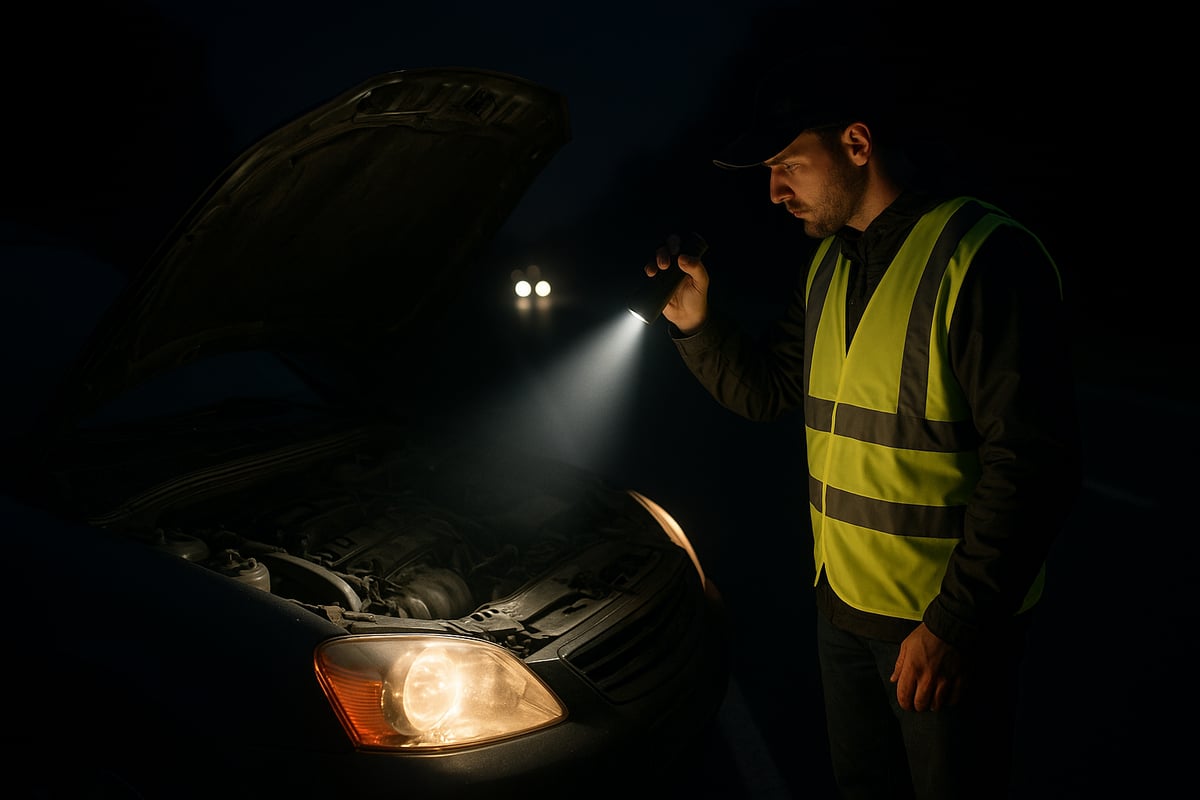
Step outside only if it is safe, and use a torch or your phone light to inspect around the vehicle. Look for visible damage, such as fluid leaks under the car, a flat tyre, or evidence of overheating beneath the bonnet. Use caution, and avoid touching hot or moving parts.
Many drivers find that when their car broke down at night, the most frequent culprits are battery failure, flat tyres, engine overheating, and running out of fuel. In fact, battery-related issues account for approximately 35 percent of night-time breakdowns. The following table summarises these common causes:
| Problem |
Typical Signs |
Frequency at Night |
| Battery Failure |
Clicking noise, non-starting |
Very Common |
| Flat Tyre |
Visible deflation, wobbling |
Common |
| Overheating |
Steam, high temp warning |
Moderate |
| Fuel Issues |
Sputtering, engine stops |
Moderate |
For a deeper understanding of the issues that might occur when your car broke down at night, you can review the Common reasons cars break down.
If you are not experienced with car repairs, avoid attempting complex fixes in the dark. Most night-time roadside repairs involve simple battery jump-starts or tyre changes, as highlighted in a 2023 RAC report. For your own safety, focus on gathering information instead of taking risks.
Document the situation using your phone. Take clear photos of any visible damage, dashboard lights, and the overall scene. These images can be valuable for insurance claims or when speaking with recovery professionals. Keeping a record ensures you do not forget important details while under stress.
Stay calm, gather as much information as possible, and prepare to communicate your findings when you request assistance. Understanding what has happened will help speed up the recovery process and keep you in control of the situation.
Step 3: Communicate and Request Help
When your car broke down at night, clear communication is your lifeline. The darkness and isolation can make even minor issues feel overwhelming, so knowing exactly how to reach help is essential for your safety and peace of mind.
Contact Emergency Services and Roadside Assistance
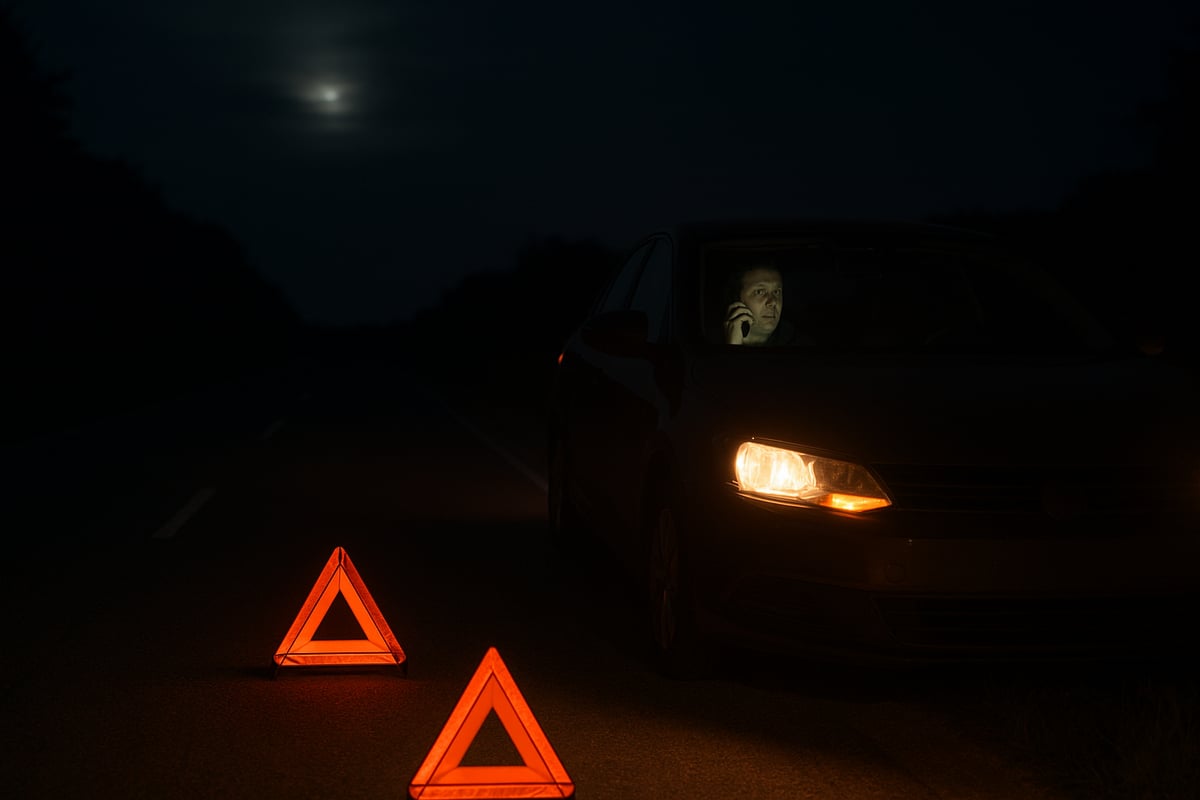
If your car broke down at night, your first priority is to contact the right help. Start by assessing whether you are in immediate danger. If so, dial 999 without delay. Police and emergency responders are trained to deal with hazardous roadside situations and can ensure your safety.
If you are not in immediate peril, use your mobile or in-car emergency call system to reach out to your breakdown provider. Many vehicles now feature integrated eCall functions, but a standard phone call remains the most reliable method. For those unsure about the process, you can consult How to get car road assistance for a detailed, step-by-step guide.
When speaking to roadside assistance, provide precise information. Use motorway marker posts, street signs, or GPS coordinates to pinpoint your location. Apps like what3words can offer an exact address, which is invaluable when your car broke down at night and visibility is poor.
Prepare the following details before calling:
- Your vehicle’s make, model, and registration
- A summary of the symptoms or issues you observed
- Your current location and direction of travel
- Any specific hazards (e.g., poor lighting, heavy traffic)
Notify a family member or friend about your situation and share your location. This adds an extra layer of security, especially if your phone battery is low or you are in a remote area.
Accurate communication can significantly speed up recovery times. In 2024, 70% of successful night-time recoveries were expedited by drivers sharing precise location details and clear information about their car broke down at night situation.
Motors Recovery: 24/7 Breakdown Assistance
When your car broke down at night, choosing a responsive and trustworthy assistance service is crucial. Motors Recovery is a leading provider in Greater London and the Home Counties, specialising in rapid, round-the-clock support for stranded drivers.
Motors Recovery offers:
- 24-hour breakdown and roadside assistance
- Towing, battery jump-starts, and recovery for cars, vans, and motorcycles
- No membership required, with transparent, pay-as-you-go pricing
- Experienced technicians aiming to arrive within 60 minutes or less
Their customer-centric approach means your safety and comfort are their top priorities. You can request a free quote and expect no hidden fees, which is especially reassuring when your car broke down at night and you need clear, honest service.
Many customers have reported that Motors Recovery technicians provided not only technical expertise but also reassurance and support during stressful night-time incidents. Fast response times and knowledgeable staff make a real difference when time and safety are at stake.
Whether you are stranded on a motorway or in a quiet suburb, Motors Recovery’s commitment to reliability and transparent service ensures that help is always within reach if your car broke down at night. Their focus on safety, comfort, and prompt communication transforms a stressful breakdown into a manageable situation.
Step 4: Stay Safe and Comfortable While Waiting
When your car broke down at night, your first priority is to remain as safe and comfortable as possible until help arrives. The darkness and isolation can make any breakdown feel more stressful, but knowing exactly what to do will keep you secure and reduce anxiety.
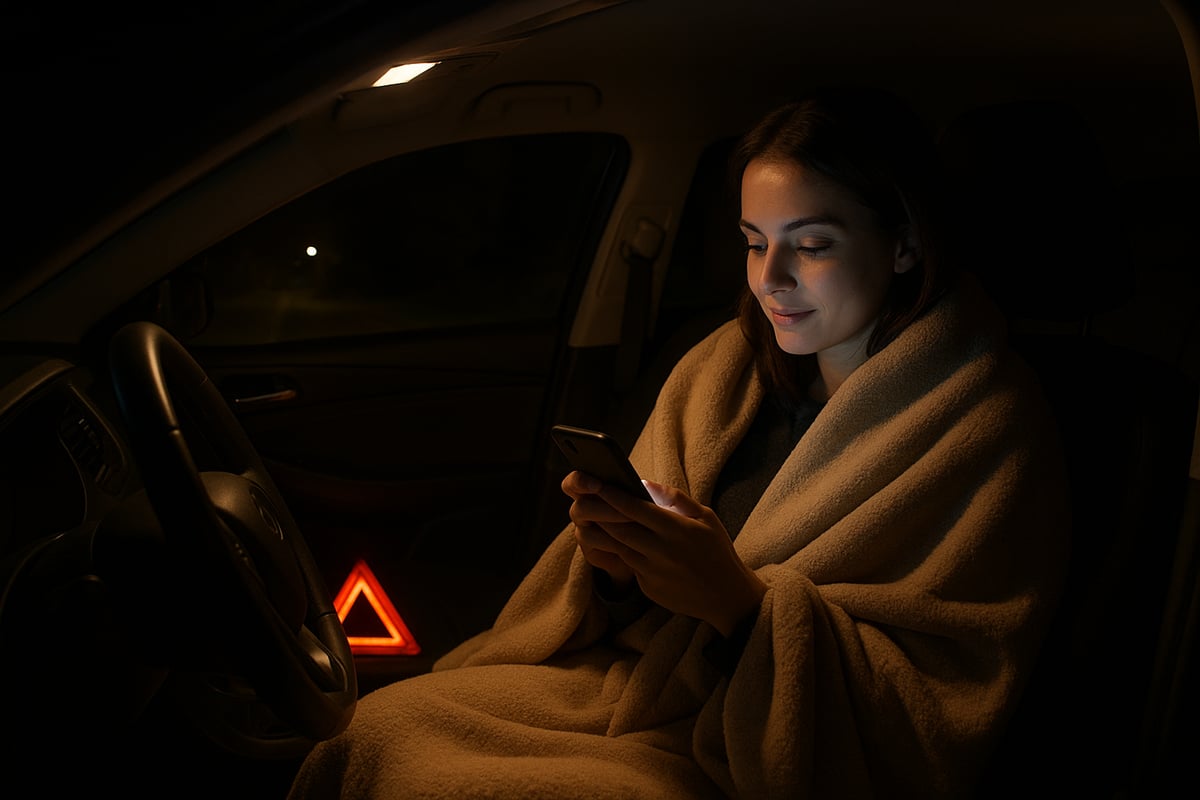
Begin by locking all doors and keeping the windows closed, especially if your car broke down at night in an unfamiliar or remote area. If you feel vulnerable, remain inside your vehicle with your seatbelt fastened. Use your hazard lights to alert other drivers to your presence, and switch on the interior light briefly if you need to locate items or check your surroundings. However, use these lights sparingly to conserve your car battery.
Staying warm is crucial, particularly if your car broke down at night during colder months. Wrap yourself and any passengers in blankets or extra clothing to prevent the risk of hypothermia. If you have an emergency kit in your car, use the thermal blanket or hand warmers. The AA recommends keeping such a kit on board at all times, including a torch, high-visibility vest, water, and non-perishable snacks.
While you wait, avoid accepting assistance from passersby unless they are uniformed emergency personnel or your previously contacted recovery service. This precaution is especially important if your car broke down at night on a quiet stretch of road. Instead, trust only official help and let family or friends know your exact location and situation.
Conserving your phone’s battery is essential. Lower your screen brightness, close unnecessary apps, and use your device only for essential communication. This ensures you can stay in touch with roadside assistance and emergency services if your situation changes. If you have children or pets with you, reassure them and keep them occupied with downloaded media or quiet games. This helps manage stress and maintains calm until help arrives.
Monitor your surroundings regularly. If you notice any changes, such as approaching vehicles or unfamiliar individuals, reassess your safety. Be prepared to move to a safer location if needed, but never put yourself at unnecessary risk by leaving your vehicle unless directed by authorities.
For added peace of mind, rely on professional services like night roadside assistance services, which offer 24/7 support and rapid response when your car broke down at night. These experts are trained to handle emergencies efficiently, prioritising your safety and comfort while you wait.
Remember, preparation and vigilance are your best defences when your car broke down at night. Stay calm, follow your emergency plan, and trust that help is on the way. By taking these steps, you ensure both your safety and peace of mind until the situation is resolved.
Step 5: Equip Your Car for Night-Time Breakdowns
When your car broke down at night, being prepared can make the difference between a stressful ordeal and a manageable situation. Modern vehicles are equipped with impressive safety features, but nothing replaces the peace of mind that comes from carrying the right emergency gear. Imagine the reassurance of knowing you have every essential item at your fingertips, especially when visibility is low and help could be some time away.
To help you feel in control when your car broke down at night, here is a table of essential gear every driver should keep in their vehicle:
| Item |
Purpose |
Why It Matters at Night |
| LED Torch |
Illuminate surroundings, inspect vehicle |
Vital for visibility in darkness |
| Reflective Triangles |
Warn other drivers, mark your location |
Prevents accidents, increases safety |
| High-Visibility Vest |
Makes you visible if you exit the vehicle |
Reduces risk of being unseen |
| Power Bank/In-Car Charger |
Keeps phone charged for emergencies |
Ensures communication |
| First Aid Kit |
Treats minor injuries |
Immediate care if needed |
| Bottled Water |
Hydration while waiting for help |
Prevents dehydration |
| Non-Perishable Snacks |
Sustains energy during long waits |
Maintains comfort |
| Emergency Blanket |
Provides warmth in cold conditions |
Protects against hypothermia |
| Compact Rain Poncho |
Keeps you dry in wet weather |
Comfort if you must exit vehicle |
| Tyre Inflator/Sealant |
Temporary fix for punctures |
May get you moving again |
| Dash Cam |
Records incidents for documentation |
Added security and evidence |
Each of these items plays a critical role if your car broke down at night, offering both practical and psychological support until professional help arrives. For a more detailed checklist and expert advice, consult the Essential car breakdown gear guide, which covers every item you should consider in 2025.
In addition to physical gear, technology can be your ally when your car broke down at night. Downloading smart emergency apps ensures you can share your precise location or request rapid assistance. Top recommendations include:
- what3words: Pinpoints your exact three-metre square location for rescue teams.
- AA app: Offers direct contact with roadside assistance and live updates.
- Motors Recovery app: Provides real-time tracking of your recovery technician.
Keeping your phone charged with a power bank or in-car charger is vital, so you never lose touch in a critical moment.
A recent study revealed that 60% of drivers who resolved their car broke down at night quickly credited their emergency kit for a smoother experience. Imagine waiting for help with water, snacks, and a blanket, rather than feeling cold, hungry, or anxious. Preparedness transforms a potential crisis into a controlled situation.
When your car broke down at night, your emergency kit is your lifeline. By investing in the right gear and embracing modern technology, you take charge of your safety and comfort, no matter where the road leads.
Step 6: Prevent Future Night-Time Breakdowns
Experiencing a car broke down at night can be unnerving and disruptive. The best way to avoid being caught out again is through proactive maintenance and smart planning. Prevention is not just about luck, but about consistent habits and vigilance.
A well-maintained vehicle is your strongest defence against a car broke down at night scenario. Begin with routine servicing, focusing on key areas that frequently cause trouble after dark. The RAC highlights that vehicles with up-to-date maintenance are 40% less likely to break down at night.
Essential Maintenance Checklist
| Component |
Check Frequency |
What to Look For |
| Battery |
Every 6 months |
Corrosion, slow start, age over 4 years |
| Tyres |
Monthly |
Tread depth, pressure, visible damage |
| Lights |
Weekly |
All bulbs working, lens clarity |
| Fluids |
Monthly |
Oil, coolant, brake, and washer levels |
| Wipers |
Every 6 months |
Streaking, splits, missed areas |
| Fuel |
Every journey |
At least quarter tank before setting off |
A car broke down at night often results from issues that could have been spotted with these checks. Flat batteries, damaged tyres, and faulty lights are among the most common causes. According to the Top 10 Reasons for Vehicle Breakdowns, neglecting these basics dramatically increases your risk.
Before any night journey, replace worn wipers and confirm all lights are functional. Rain or darkness can quickly escalate a minor issue into a major hazard if visibility is poor. Always keep fuel above a quarter tank to avoid being stranded far from a petrol station, especially if your car broke down at night on a rural road.
Planning is equally important. Share your route and estimated arrival time with someone you trust. In case your car broke down at night, someone will know your whereabouts and can help coordinate assistance. Enrol in a pay-as-you-go roadside assistance service for peace of mind without the commitment of annual fees.
Store essential emergency contact numbers in your phone and have a written copy in your glove box. This includes your insurer, a reliable recovery service, and a family member or friend. Preparation here means you are never left scrambling for help if your car broke down at night.
Recent findings in the RAC Report on Motoring 2025 reveal that unplanned repairs can leave drivers without their vehicles for a day or longer. Regular checks and timely maintenance can spare you from the inconvenience and stress of a car broke down at night.
By making these preventive actions a habit, you significantly reduce the risk of being stranded when your car broke down at night. Maintenance and planning are your best shields against the unexpected, ensuring every journey ends safely.
Step 7: Expert Tips for Managing Stress and Staying Calm
When your car broke down at night, stress and uncertainty can quickly take over. Staying calm is not just about comfort, but also about making safe, rational decisions. This final step equips you with practical techniques to manage anxiety and keep control, no matter how daunting the situation feels.
Stay Calm with Practical Steps
The moment you realise your car broke down at night, your first reaction might be panic. Instead, pause and take a few deep breaths. Controlled breathing can significantly lower your heart rate and help you think more clearly.
Open a mindfulness or relaxation app on your phone if you have one downloaded. Listening to calming music or a guided meditation can shift your focus away from the stress, giving you a sense of control.
Remind yourself that breakdowns at night are common, and you are not alone. Over 800,000 night-time callouts are handled each year in the UK, proving that help is always available.
Structured Planning for Peace of Mind
Having a clear, step-by-step checklist can make a huge difference when your car broke down at night. Refer to your emergency plan or use a notes app to track actions: safety measures, contacting assistance, and documenting the situation.
Following a checklist helps maintain order and prevents panic from setting in. Knowing you are prepared gives you confidence, even in the dark.
Many drivers underestimate the importance of preparation. According to the Winter Breakdown Preparedness Survey, a significant number of people are caught off guard without essential safety gear. This highlights why staying organised and calm is crucial in these situations.
Supporting Passengers
If your car broke down at night with children or pets in tow, your calmness sets the tone for everyone. Reassure children with a gentle voice and explain that help is on the way.
Keep them engaged with downloaded games, music, or stories. For pets, maintain their usual routine as much as possible and offer water or comfort items.
Short activities and positive distractions can reduce anxiety for all passengers, helping everyone remain patient while waiting for assistance.
Avoid Rash Decisions
In stressful moments when your car broke down at night, it is tempting to try and fix the problem or leave the vehicle in search of help. Resist this urge.
Wait for professional roadside assistance, especially if you are unfamiliar with car repairs or the area is unsafe. Attempting repairs or walking along a dark road increases your risk.
Stick to your plan, stay inside the car if safe, and keep communication lines open. Making decisions calmly, not impulsively, will protect you and your passengers until help arrives.

